© 2012 Ken Braddick/dressage-news.com
Destiny in a name.
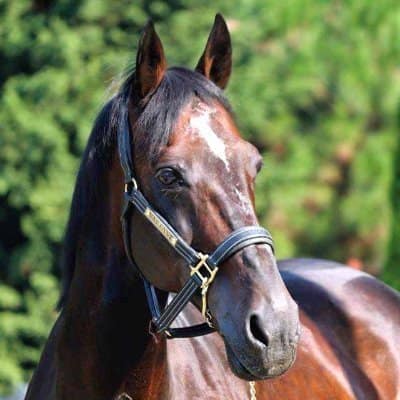
Valegro was the perfect demonstration of how destiny can redraw the boundaries of sport. Born on July 5, 2002, in the windswept lands of Burgh Haamstede in the Netherlands, the foal was registered by breeders Joop and Maartje Hanse under the name Vainqueurfleur. That combination—joining the word for “winner” with the name of his dam, Maifleur—carried a promise that would be fulfilled in a completely unexpected way.
A formidable genetic combination.
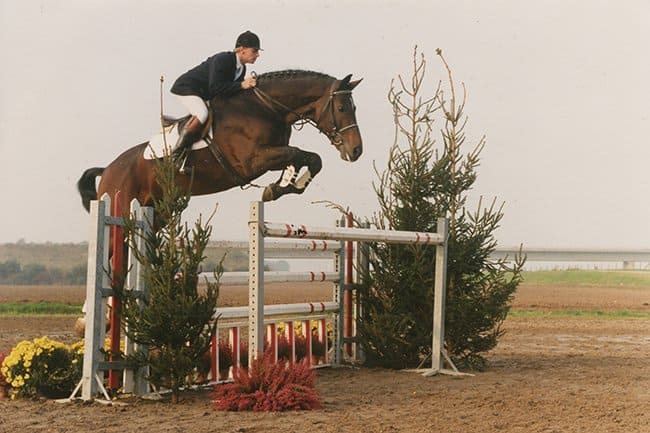
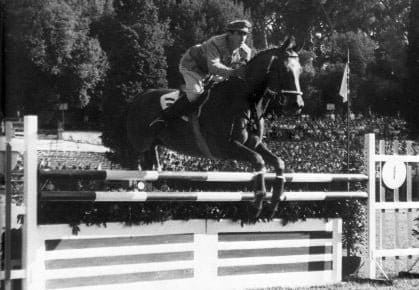
Although his paternal genetics were rooted in dressage thanks to the stallion Negro, his maternal line spoke the powerful language of show jumping. His grandsire was the monumental Gershwin and his great-grandsire the legendary Voltaire—pillars of a dynasty born to soar over fences, not to dance on the sand. It was precisely this genetic combination that transformed him into an extraordinary athlete.
Nimmerdor’s legacy: from Cidor to Valegro.
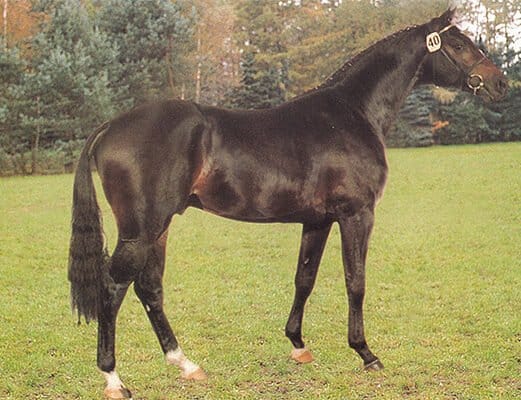
The true key to Valegro’s success lies in an exceptional genetic combination, where the cross between a solid dressage foundation and a monumental showjumping dynasty redefined modern breeding standards. While his sire, Negro, endowed him with the drive and work ethic characteristic of the Ferro bloodline, it was his damline that provided him with an extraordinary hind-end engine. His dam, Maifleur, was by Gershwin and out of a daughter of the legendary Voltaire; tracing this pedigree further back reveals the presence of the influential Dutch stallion Nimmerdor, a pillar of global breeding.
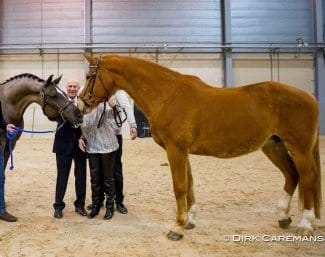
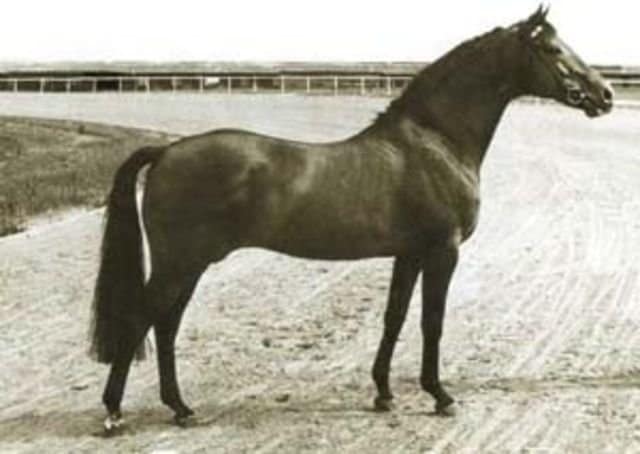
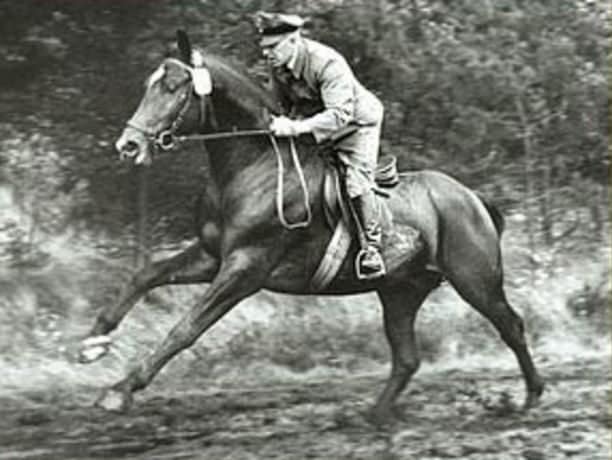
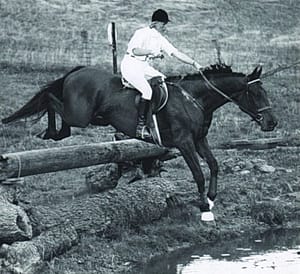
Nimmerdor’s impact extends beyond the power he passed on to showjumping courses; his genetics demonstrated extraordinary versatility, capable of producing elite athletes for the dressage arena as well. A prime example is Cidor, a gelding sired directly by Nimmerdor, who competed with great success at top-level international venues in the 1990s under the renowned US Olympic rider Belinda Nairn-Wertman. The moving story of this incredible partnership and their remarkable rise in the world of dressage was featured in an in-depth archival special on Eurodressage. This shared genetic lineage—characterized by supple joints and immense hindquarter strength—is the same heritage that flowed into Valegro, endowing him with a structural drive that translated into a piaffe and passage of unprecedented intensity.
Arrival in England and the nickname “Blueberry”.
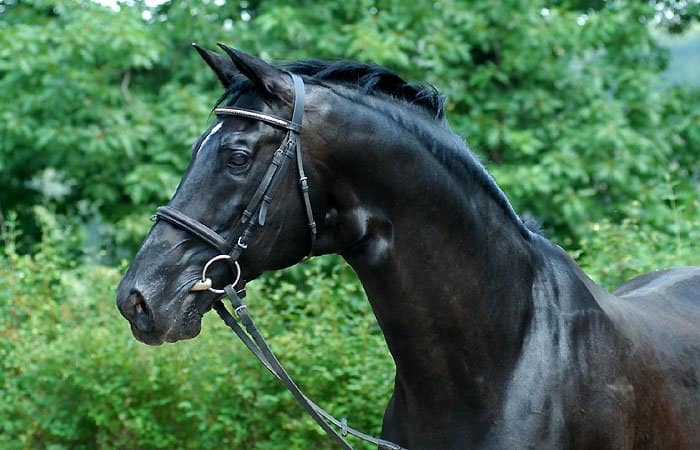
When British rider Carl Hester bought him as a youngster and brought him to his stables in Gloucestershire, that dark bay was renamed Valegro. To everyone, he simply became Blueberry—a gentle giant with an unflappable temperament and an insatiable appetite, who loved spending his days in the pasture with his stablemate Uthopia.
The encounter of a lifetime.
The encounter that forever changed the history of equestrian sport took place when Valegro was entrusted to the hands of the then-young and unknown Charlotte Dujardin. Together, the rider and the Dutch gelding found a perfect chemistry. That explosive hind-end power—inherited from show-jumping ancestors and initially considered excessive by the judges of the time—was channeled into a level of coordination and lightness never seen before.
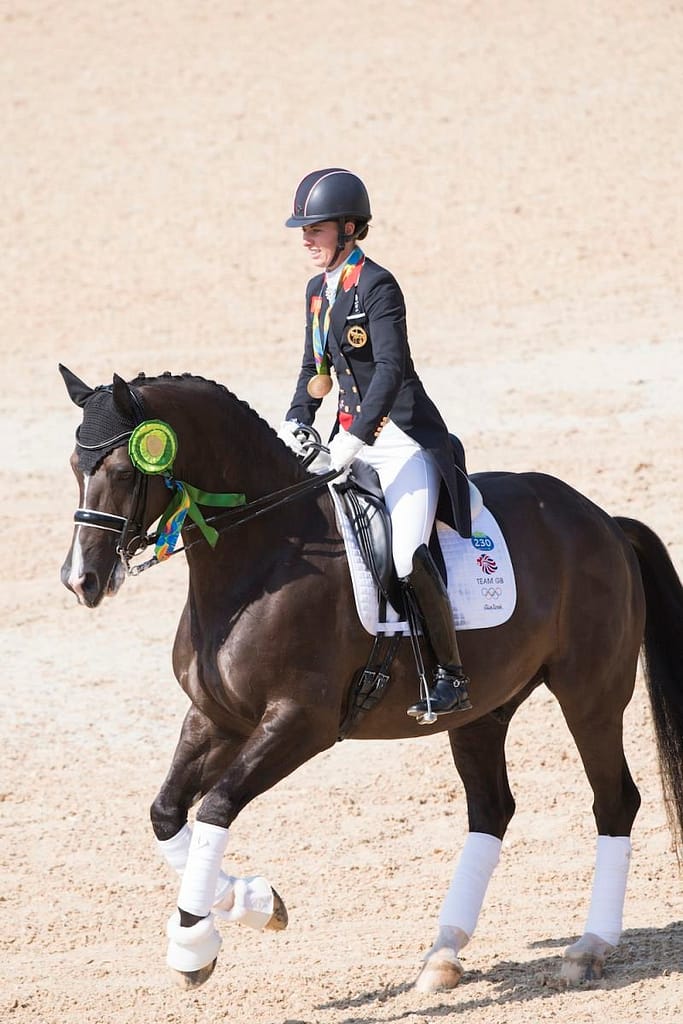
Fun fact: at Carl Hester’s stables, he wasn’t called Valegro, but rather “Blueberry.”
An inseparable pairing.
In the competition arena, Valegro did not merely execute Grand Prix movements; he seemed to float, transforming physical effort into pure geometric harmony. The pair quickly became an unbeatable record-breaking machine, capable of rewriting world dressage scores and racking up dozens of perfect tens for the most complex movements.
The pinnacle of global success.
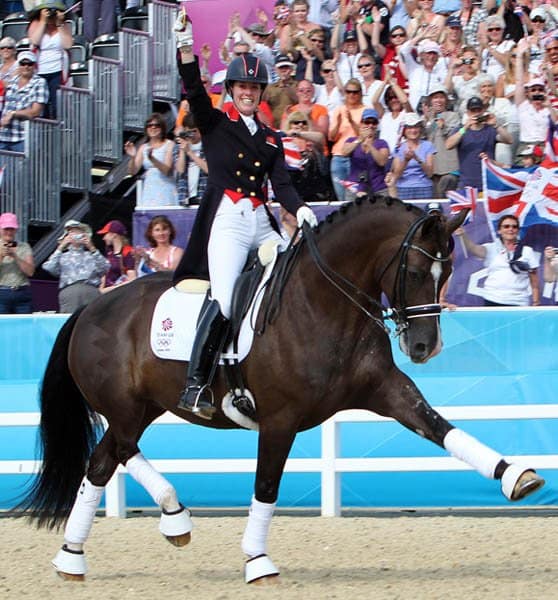
Between 2014 and 2015, Valegro reached the pinnacle of the sport, simultaneously holding the Olympic, World, and European titles, as well as the World Cup. His record included three historic Olympic gold medals—won in the arenas of London 2012 and Rio 2016—which cemented his status in the eyes of the general public as the horse of the century.
The retirement of the undefeated king.
Immediately after his triumph in Rio—at just fourteen years of age and at the peak of his physical condition—his team decided he should retire from competition. Valegro bade farewell to his audience in London in December 2016, leaving the arena as an undefeated king to return to the stable life he loved so much: long country walks and lazy afternoons in the paddock.
An eternal legacy.
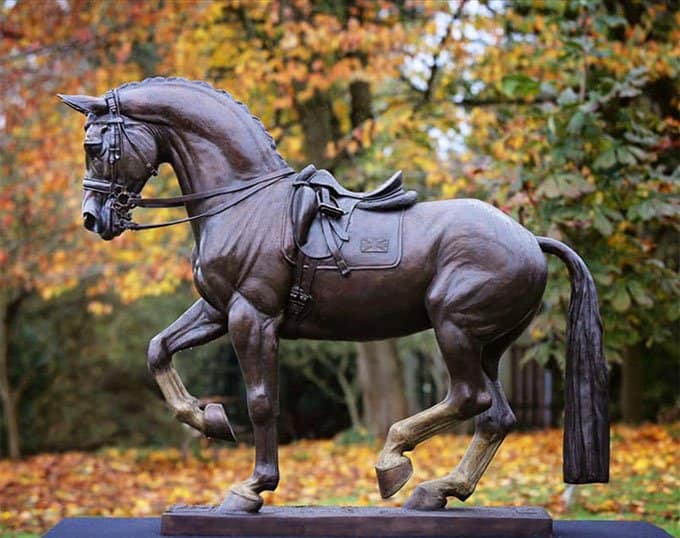
Valegro’s long journey came to a peaceful end on December 1, 2025, at the age of twenty-three, in the gentlest way possible: alongside his lifelong companion, Uthopia. His legacy lives on in the bronze statue in Newent and in the children’s stories that continue to inspire new generations. For breeders and enthusiasts worldwide, he remains the perfect embodiment of modern breeding—living proof that when the power of the jump meets the grace of dressage, genetics does not merely create a champion, but writes an immortal legend.