Helena Allaire ‘Lana’ du Pont Wright (6 July 1939 – 23 April 2025) was a pioneer of equestrianism, a woman who embodied the physical courage and tenacity needed to break down gender barriers in sport. Her story is one of a journey into a traditionally male-dominated world, eventing, where she proved that the fragile image of women could not withstand the rigours and adrenaline of the discipline. To tell Lana’s story is to recount a historic moment when the equestrian world finally had to acknowledge the strength of women.
Background, family and upbringing: an elite environment
Born on 6 July 1939 in the United States to Richard Chichester du Pont and Allaire du Pont, Helena Allaire du Pont Wright – known to everyone as Lana – grew up in a privileged environment with deep ties to the equestrian world. The du Pont family is one of the most influential in the United States, with vast estates such as Unicorn Farm in Delaware, where the traditions of horse riding and fox hunting are a well-established legacy.
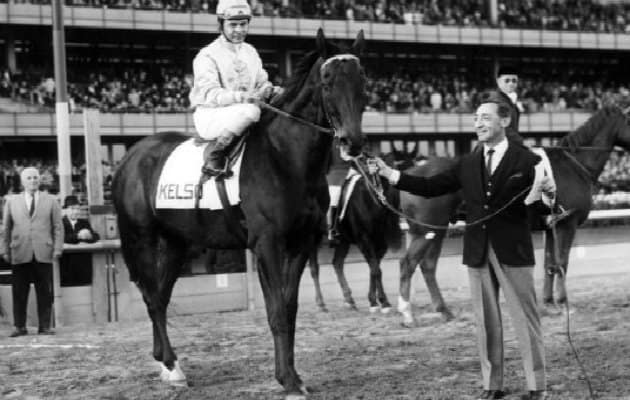
Her mother, Allaire du Pont (née Crozer), had left an indelible mark on the world of horses, having bred the legendary thoroughbred Kelso, a five-time champion on the American racing circuit.
Her father, Richard C. du Pont, was known as a pioneer of aviation and gliding, bringing a further pioneering spirit to the family.
Lana attended the prestigious Oldfields School in Baltimore, a private girls’ boarding school renowned for its educational excellence. Her privileged social background ensured she had access to the finest horses and the most effective training from a young age. These advantages laid the foundations for a sporting career destined to change the history of women’s equestrianism.
The 1964 barrier: challenging the male-dominated tradition of eventing
Until the 1960s, eventing was considered the last male stronghold in equestrian sport. Derived from military cavalry training, this discipline is a gruelling three-day event that tests endurance and skill: dressage, cross-country and show jumping. Cross-country in particular demands courage and strength, with imposing natural obstacles and a fast pace.
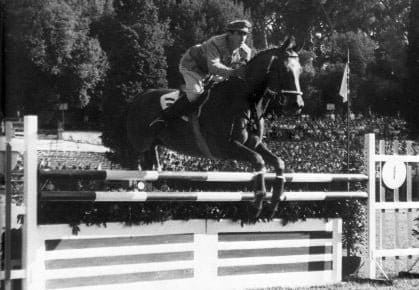
The prevailing belief was that this event was too gruelling for a woman, who was deemed too fragile to tackle such rugged terrain and to withstand the risks of falls and accidents. But in 1964, at the Tokyo Olympics, Lana decided to challenge this stereotype. Not only did she take part, but she set out to prove in practice that a woman could compete on equal terms with men in one of the most gruelling and technically complex disciplines of equestrian sport.
“Iron Lana”: a test of strength and tenacity in Tokyo and two memorable falls
The nickname “Iron Lana” was coined during those very Olympic Games, where her performance became legendary. The cross-country event took place on the gruelling Karuizawa course, a terrain rendered almost impassable by relentless rain that turned every metre into a quagmire of mud.
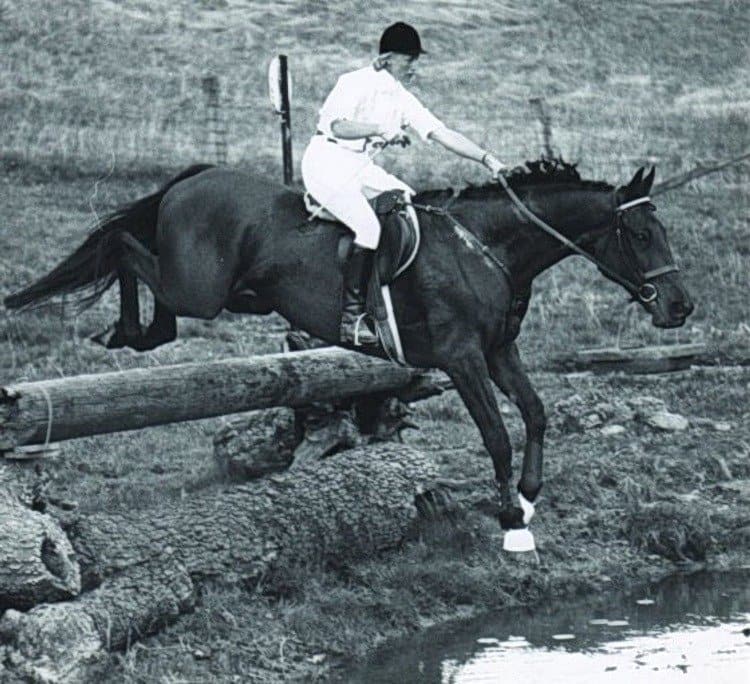
During the first stage of the race, Lana and her horse Mr Wister slipped violently on ground made slippery by the rain. The impact was so severe that the horse broke several bones in his jaw, a serious injury. Yet, despite the pain and shock, Mr Wister got back up immediately, driven by an indomitable spirit, a direct reflection of Lana’s determination.
Towards the end of the course, when fatigue was now taking its toll on both of them, came the second fall. This time, stumbling over a wide obstacle, the pair fell into the mud once more. Many would have given up, but Lana, filthy, aching and injured, climbed back into the saddle. She carried on to the finish line, finishing the race in 33rd place individually.
The personal result mattered less: that display of sheer willpower helped the US team win the silver medal, a triumph that was above all symbolic. At a time when even a single fall would have led to elimination, Lana proved that female strength could withstand the impact, and with style.
Mr Wister: a ‘difficult’ horse, but perfect for an impossible challenge
What made the story even more epic was the relationship between Lana and her partner, Mr Wister. He was no ordinary horse, but a former English thoroughbred born in Maryland and originally intended for racing. With a neurotic temperament and boundless energy, Mr Wister was known for being ‘out of control’. Exactly what Lana needed.
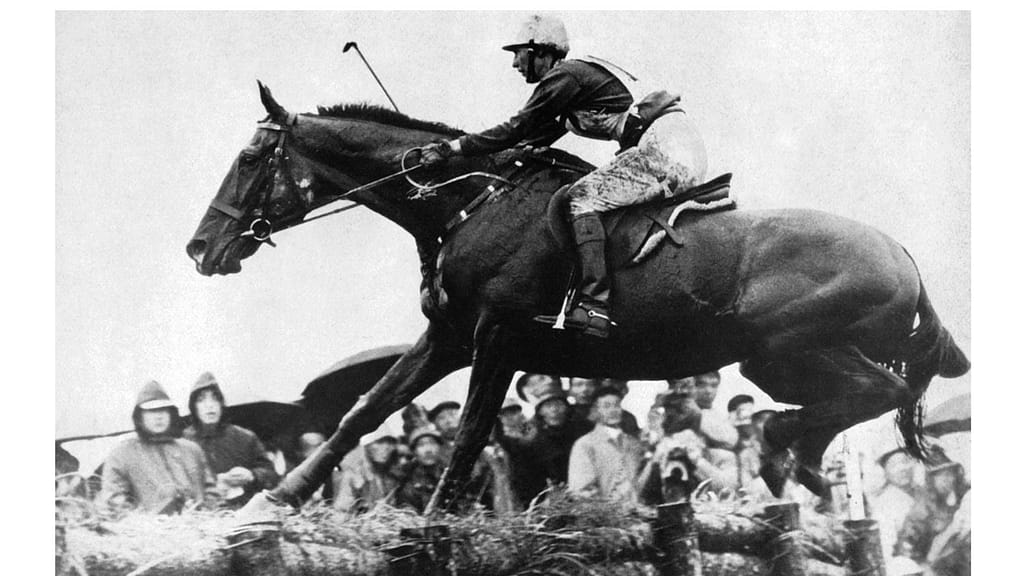
The partnership presented a real challenge: taming such a spirited horse in the toughest event of the eventing competition required a unique combination of physical strength, intelligence and courage. By 1961, the pair had already made their mark by finishing tenth at the Badminton Horse Trials, one of the world’s most prestigious events.
Lana chose Mr Wister precisely for these qualities, affirming through her choice a pioneering philosophy: only through mutual determination between horse and rider can one tackle what seems impossible.
The historical impact of Lana du Pont: breaking the glass ceiling and gender equality
Lana’s achievement at the Olympics meant more than just a medal: it was the hammer blow that brought down a cultural and regulatory barrier. After 1964, neither the International Olympic Committee nor the International Equestrian Federation could any longer justify excluding women from the most gruelling events in eventing.
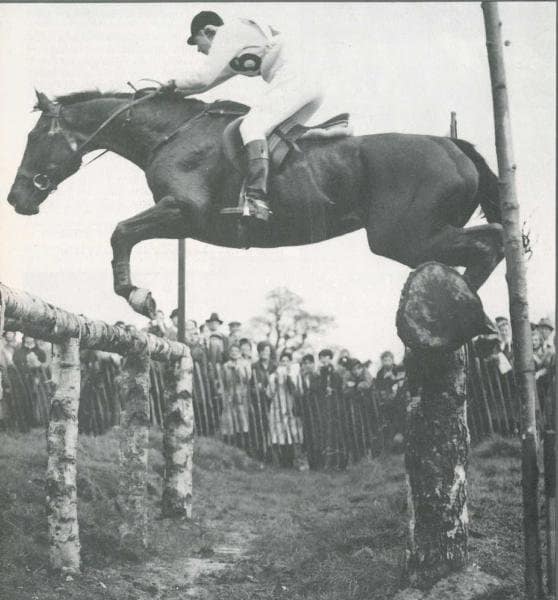
Today, the all-around remains the only Olympic discipline in which men and women compete on equal terms, without any division into separate categories. Lana du Pont was the first to prove in practice that there are no gender differences when it comes to endurance, courage and technique.
A long and varied career: beyond Tokyo
Her success at the Olympics was not the end of the story, but a springboard. Lana continued to compete at the highest level for decades, branching out into combined driving (harness racing), a discipline that demands a rare technical versatility. In every aspect of equestrian sport, her presence stands out for its quality and passion.
Personal life: love, family and tragedies
Lana du Pont Wright married Dr William H. “Bud” Wright, a veterinary surgeon specialising in horses, who passed away in 2010. They had two daughters: Beale Wright Morris and Lucy Wright Dunne.
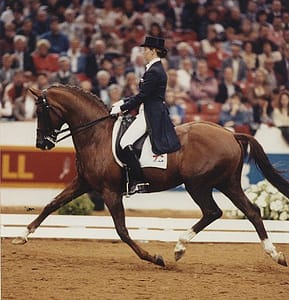
Beale followed in her mother’s footsteps, emerging as a top-level rider in the discipline of eventing. She was selected as a final candidate for the US Olympic team for Sydney 2000 and distinguished herself in major international competitions such as the Rolex Kentucky Three-Day Event. Known for her bond with the horse Happy Go Lucky, Beale embodied the spirit of dedication and talent passed down by her mother.
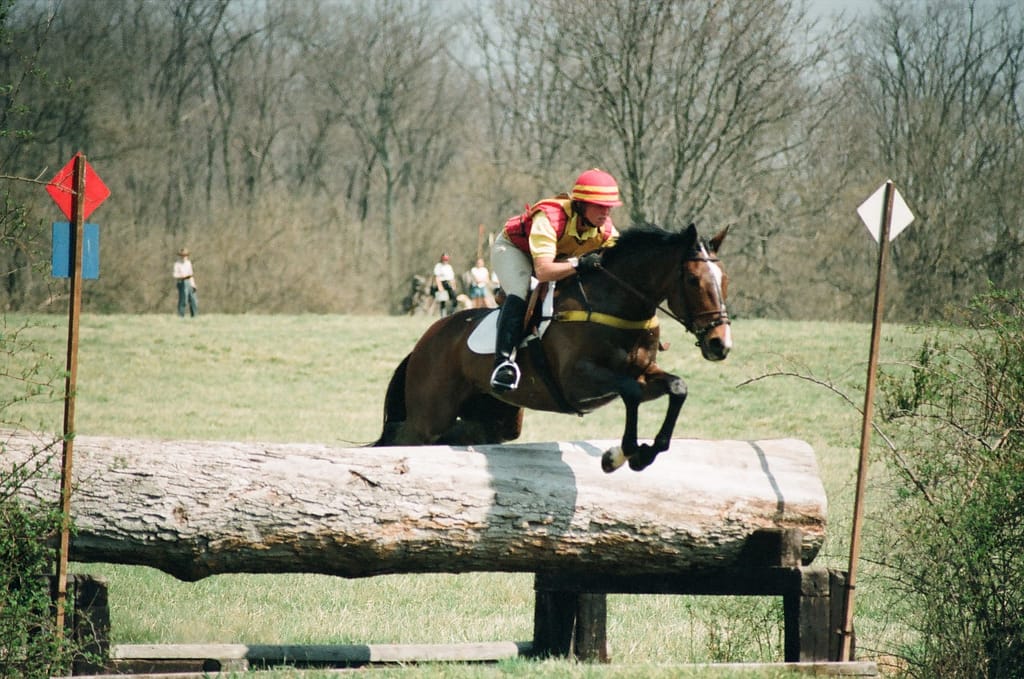
The photograph was taken on 29 March 1998 at Morven Park – Advanced, Leesburg, Virginia.
Her untimely death in 2005, at the age of 34, following a sudden brain aneurysm, had a profound impact on the equestrian community. To honour her, friends and family established the Beale Wright Morris Memorial Trophy, awarded annually at Fair Hill International to celebrate sportsmanship and dedication in eventing. Lucy Wright Dunne, meanwhile, remains a pillar of the family and a living testament to Lana’s legacy.
Conclusion: the remark that shattered the myth of ‘fragility’
After that historic race in Tokyo, Lana said with a touch of irony and pride: ‘We proved that a woman can do it… and no one could have said we looked feminine at the finish line.’ This statement sums up her legacy: a woman capable of embracing risk, hard work and setbacks.
Share the article on your favorite social network
You may also be interested in :
Subscribe to the newsletter to receive new articles from the Blog